2026-09-12 · John Reilly
Separating Recyclables from Construction Waste in Cape May Projects
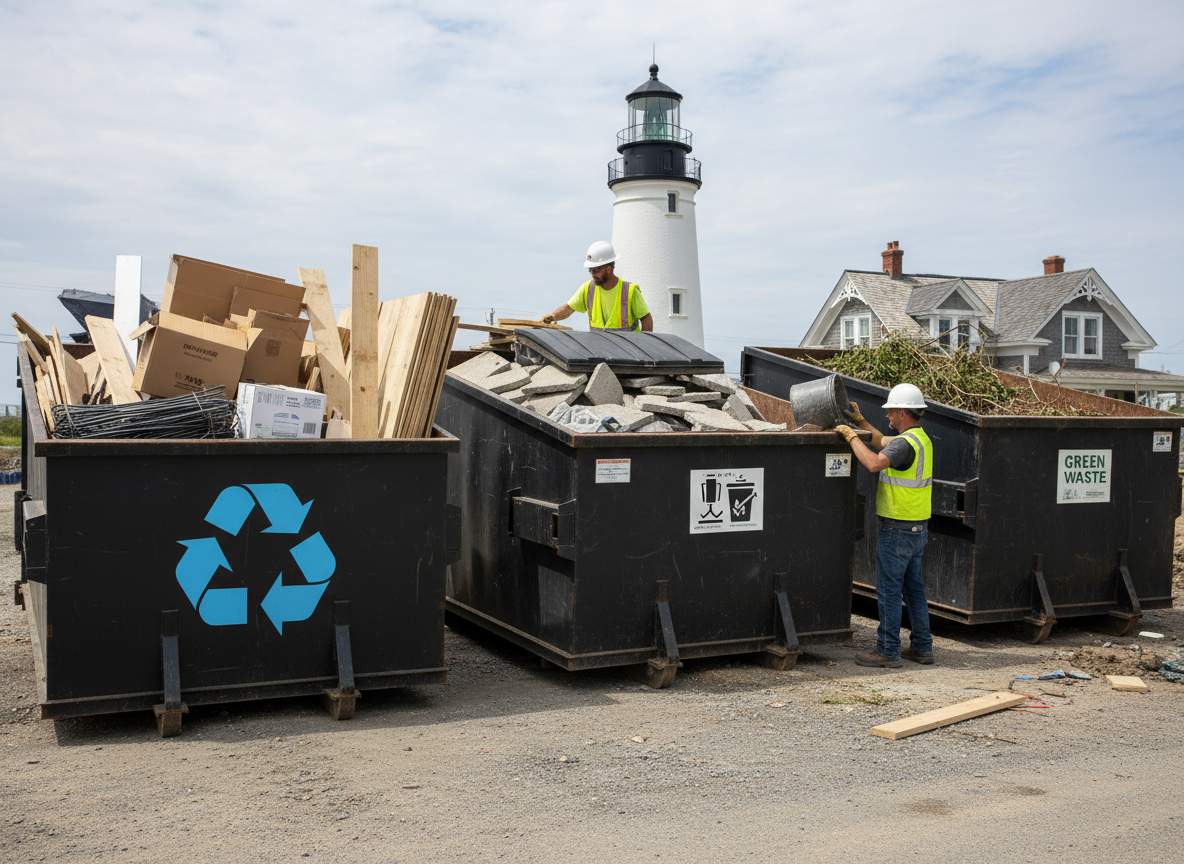
In Cape May projects, separating recyclables from construction waste begins with on-site sorting of wood, metal, drywall, and concrete before any material enters a rolloff dumpster. Crews working on Victorian homes in the Cape May Historic District routinely pull copper piping, steel beams, and clean lumber aside so those items avoid the mixed-waste stream that raises landfill fees. The Atlantic Ocean-moderated humid subtropical climate brings frequent rain, which means crews cover sorted piles immediately to prevent water damage to reusable wood and metal.
Sorting Materials Common to Cape May Renovations
Older homes in Cape May and West Cape May often contain plaster, heart-pine flooring, and single-pane windows that must be pulled apart before loading. Crews set up three ground tarps labeled for clean wood, ferrous metals, and concrete rubble so each category stays uncontaminated. Once winter temperatures drop, crews work faster to keep metal and wood dry before loading the rolloff dumpster. This method keeps loads lighter and prevents rejection at transfer stations that serve Cape May County.
On-Site Separation Steps for Rolloff Dumpster Rentals
- Designate a flat staging area near the work zone, ideally on a driveway or side yard in North Cape May.
- Pull reusable items as demolition proceeds and place them on labeled tarps.
- Break concrete into 2-foot pieces so it stacks efficiently without filling air space in the container.
- Load only non-recyclable debris into the rolloff dumpster once the recyclables are staged for separate pickup.
These steps reduce the weight of the main container and let crews schedule one extra haul for metals and clean wood when the project is complete.
Weather and Terrain Realities in Cape May County
The Atlantic Ocean keeps Cape May summers humid and winters milder than inland areas, yet sudden coastal storms can soak uncovered piles within minutes. Crews therefore stage recyclables under temporary canopies when working near the Cape May Lighthouse or Washington Street Mall. Sandy soil in West Cape May and North Cape May drains quickly but shifts under heavy equipment, so crews place plywood under rolloff dumpsters to prevent tipping during loading. These local conditions make pre-sorting essential rather than optional.
Continuing Your Project Planning
Homeowners tackling full renovations often review container sizing options next. Choosing the Right Rolloff Dumpster Size for a Cape May Victorian Renovation explains how 20-yard and 30-yard units match typical Cape May job scopes. For larger demolition phases, Construction Dumpster Rental details container dimensions that accommodate separated loads without overflow. Projects in West Cape May can also reference West Cape May for street placement rules that affect where sorting stations fit.
Cost and Compliance Outcomes
Proper separation keeps loads under weight limits that Cape May County transfer stations enforce, avoiding $75–$150 overweight charges per ton. Clean wood and metal can be diverted at no charge or even generate small credits at local recyclers serving Wildwood and North Cape May. Crews finish jobs faster when the rolloff dumpster contains only true waste, which matters during peak summer tourism when street access near Congress Hall is limited. Fast Dumpster Rental Cape May remains available Mon–Sun 24/7 to swap containers the same day crews complete sorting.