2026-09-12 · John Reilly
How to Handle Storm Debris After a Nor'easter Hits Cape May
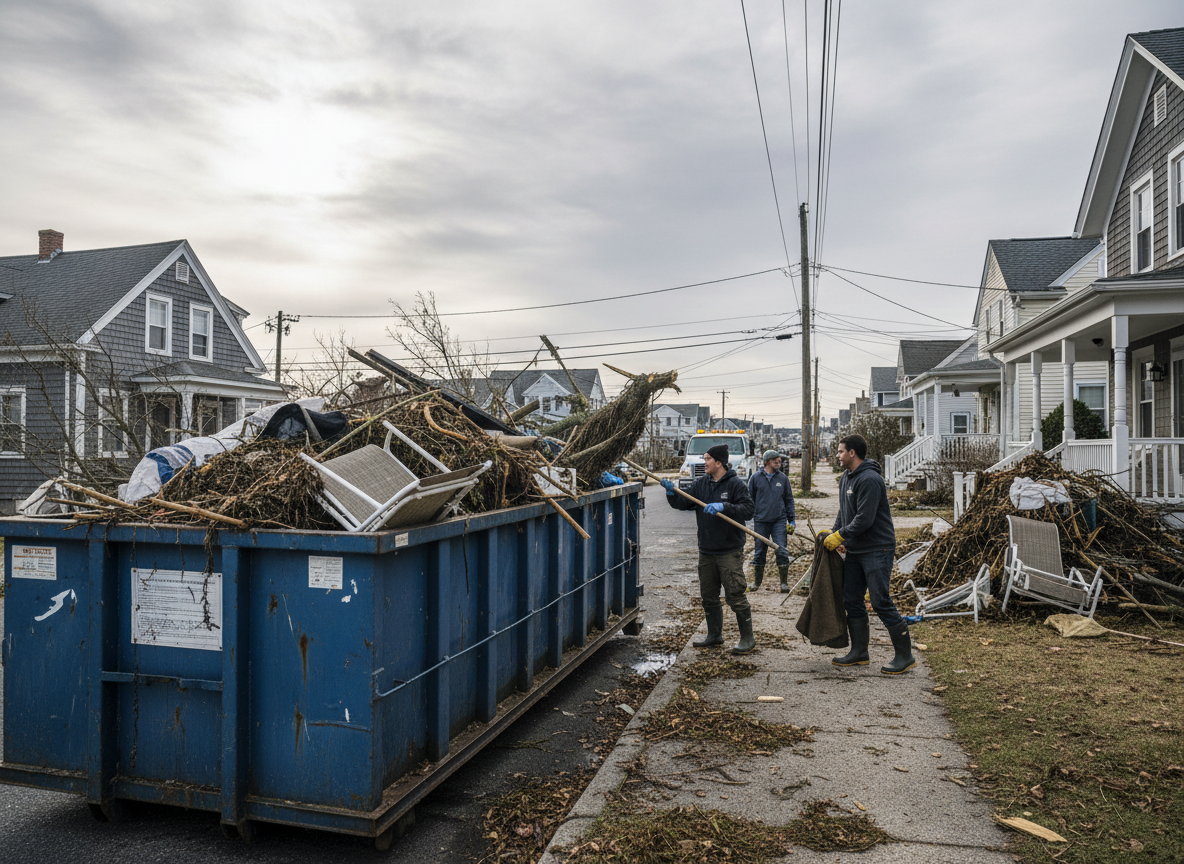
After a Nor'easter hits Cape May, begin by sorting debris into yard waste, construction scraps, and household items, then secure a 20- to 40-yard rolloff dumpster for same-day or next-day delivery to handle the volume before the next high tide or wind event.
Sorting Debris by Type in Cape May's Historic Neighborhoods
Cape May's older housing stock in the Cape May Historic District and around Washington Street Mall produces a distinct mix after storms. Tree limbs from the humid subtropical climate, roof shingles from Congress Hall-era homes, and flooded insulation from West Cape May cottages must be separated on site. Yard waste like salt-soaked branches goes into one pile, while metal, drywall, and treated lumber go into others. This separation prevents contamination fees and keeps loads legal at Cape May County transfer stations. Homeowners along the oceanfront often face additional sand and seaweed that cannot mix with construction debris. Taking time to sort on the ground speeds up loading and avoids rejected loads when the hauler arrives.
Selecting Rolloff Dumpster Sizes for Nor'easter Volumes
A 10-yard container handles light yard cleanup in smaller West Cape May yards, but most Nor'easter jobs need 20- or 30-yard units once roofs and fences are involved. Larger 40-yard rolloffs work best for whole-home gut-outs in North Cape May or Wildwood properties damaged by surge. Weight matters more than volume here because wet debris from Atlantic-driven rain can exceed 10 tons quickly. Check load height rules with the rental company before filling to the top. Pricing factors such as tonnage, rental days, and fuel surcharges are detailed in local rate guides that explain how Cape May County disposal fees change with seasonal storm frequency.
Placement Rules and Street Permits Near Landmarks
Placing a rolloff in front of a Cape May Lighthouse property or along the Washington Street Mall corridor often requires a street permit from the city. Driveways in the Cape May Historic District are narrow, so many residents request sidewalk or street placement with proper cones and reflective tape. The 24/7 availability of local haulers allows delivery before dawn when traffic is light around Congress Hall. Always confirm weight limits on older brick alleys in West Cape May to avoid cracking pavement. A quick call to the permitting office prevents the truck from being turned away on arrival.
Loading, Scheduling, and Follow-Up Removal
Load heaviest items first and keep the fill level even to prevent shifting during transport. In Cape May's flat terrain, this matters less for tipping but still affects safety when the truck pulls away from narrow lanes. Schedule pickup the same day the container is full, especially when another low-pressure system is forecast. Many crews return within 24 hours because the company operates around the clock. After the container leaves, walk the property once more for missed shingles or branches that could clog storm drains before the next tide cycle. This final check keeps the job complete and the site ready for the next weather event.
Continuing Local Guidance on Debris Projects
For projects that expand beyond storm cleanup, readers often review how rolloff prices shift with seasonal demand in Cape May County. Others check current permit requirements when a container must sit on a public street near the Cape May Historic District. Yard waste loads benefit from dedicated containers that keep organic material separate from construction debris throughout the process.